Michael Jordan Sports Illustrated 101: Collecting & Grading
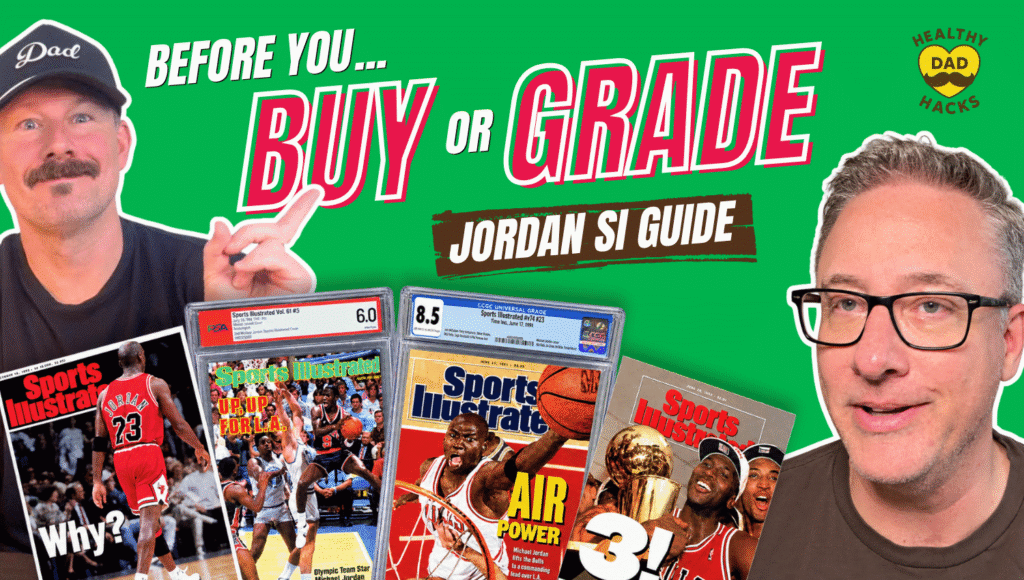
We all have at least one Michael Jordan Sports Illustrated magazine sitting in a dusty box somewhere. Is it time to dust them off? James Kehoe joins a "Dad to Dad" interview to breakdown Jordan's SI magazines, which ones are most valuable, how to evaluate condition, and prepare for possible grading.
We all have at least one Michael Jordan Sports Illustrated magazine sitting in a dusty box somewhere. Is it time to dust them off? James Kehoe joins a "Dad to Dad" interview to breakdown Jordan's SI magazines, which ones are most valuable, how to evaluate condition, and prepare for possible grading.
by
Eric Sharp

Modified last on
Oct 24, 2026
Topics
Amazon Affiliate Disclaimer
This content may contain affiliate links, which means that if you click on one of the product links, I may receive a small commission to help purchase more Dad-friendly products to do more helpful reviews! As an Amazon Associate I earn from qualifying purchases.
Before we had highlights on our phones, we had Michael Jordan on the cover of Sports Illustrated.
Those magazines were reading material, bedroom posters, and apparently something I needed to keep in a box for a few decades.
After buying Jordan’s 1984 “A Star Is Born” issue, I started looking at my other Sports Illustrated magazines differently — and wanted to learn more about collecting and grading them. What should I inspect? Does a mailing label matter? Which Jordan issues are valuable? And if I decide to grade, do I choose CGC or PSA?
For the second episode of Dad to Dad (watch the series on YouTube), I invited James Kehoe, the collector behind CGC Sports Illustrated, to help me figure it out. James prepares comics and magazines for grading, collects graded issues himself, and is a dad who understands why these old covers mean something beyond their price tags.
Watch My Interview with James Kehoe
Whether you’re digging out your childhood collection or shopping for your first Jordan cover, our conversation is a good place to start.
Highlights
- Why collect Michael Jordan magazines alongside sports cards?
- Newsstand versus subscription copies — and why the difference matters
- Jordan’s early covers, including “A Star Is Born”
- Inspecting raw magazines before buying or grading
- Prepping for grading: cleaning and pressing
- CGC vs PSA
- Fatherhood, nostalgia, and making your beginner mistakes cheap
Resources discussed
Where to find James
- linktr.ee/CGCSportsIllustrated
- YouTube: @CGCSportsIllustrated
- Instagram: @CGCSportsIllustrated
Meet James: From Childhood Collection to Full-Time Business
James collected cards, magazines, and Starting Lineup figures as a kid. Like plenty of us, he stepped away as adult responsibilities took over.
While preparing to move years later, he rediscovered a box of newsstand Sports Illustrated issues. Researching them led him to graded magazines, and the interest eventually grew into a full-time business preparing comics and magazines for grading.
His favorite story involved a Jordan magazine his mom bought him in 1992. Decades later, it received a 9.8 in his first grading submission. Of the hundreds of slabs he owns, he said that copy means the most to him.
That’s a collecting story I can get behind.
Why Collect Michael Jordan Sports Illustrated?
James pointed to two things magazines do particularly well:
- displaying incredible photography
- capturing specific moments in sports history
A cover can bring back a championship, a retirement announcement, or the excitement of following Jordan as a kid. These were the pictures some of us put on our bedroom walls—possibly after ripping them off the magazine. Sorry, future collectors.
We also discussed Time, Newsweek, SLAM, and Beckett (see my listing of 29 Jordan Beckett covers!) His advice was to understand the market, but start with something you actually enjoy owning.
Newsstand vs. Subscription: Learn This First
James called this the first distinction new magazine collectors should understand.
- Newsstand copies: Sold individually at stores rather than mailed to subscribers.
- Subscription copies: Delivered to subscribers, often with an address label or evidence of a removed label.
He explained that newsstand copies can command substantial premiums, depending on the issue and condition. Removing a label doesn’t turn a subscription copy into a newsstand copy.
Label removal can also leave residue, lift ink, or damage the cover. For beginners, his advice was to leave it alone while learning the differences. Identification varies by publication, so don’t assume the same rules apply to Beckett and SI.
My “A Star Is Born” Purchase
I found my December 10, 1984 issue through Facebook Marketplace and negotiated to buy it from a larger lot.
It’s Jordan’s first SI cover in a Bulls uniform—not his first SI appearance. James explained that Jordan had appeared previously on a North Carolina cover with Sam Perkins and on a 1984 Olympic cover.
My copy has defects, including creases and a tear on the back. But owning it felt a little like adding a well-loved Jordan rookie card to my collection. The personal appeal mattered more than chasing a perfect grade.
What to Check Before Grading a Magazine
James recommended starting with structural integrity, then looking at cosmetic wear:
- Is the cover attached at the staples?
- Are the interior pages and centerfold complete and attached?
- Is there staple rust, staining, or missing material?
- Are there spine splits, tears, or chipped ink?
- What do angled light and glare reveal about scuffs, dents, and bends?
We also discussed buying risks such as trimming and undisclosed color touch. A magazine looking good inside a bag doesn’t replace actually inspecting it.
CGC, PSA, and Preparing for Grading
James shared several observations from his experience submitting and handling graded magazines:
- Grading: He said crossover results he’s tracked suggest PSA has been grading more strictly. That’s his observation, rather than a guarantee that a magazine will receive a particular grade at either company.
- Resale: At the time of our conversation, James was seeing some PSA-graded magazines sell for a premium over comparable CGC copies. The issue, condition, and individual sale still matter.
- Holders: James highlighted PSA’s UV protection, durability, and scratch resistance as selling points. He also noted that some collectors prefer CGC’s blue label and overall presentation.
- Fees: The grading prices he discussed were broadly similar. Check current fees, shipping, insurance, and any preparation charges before deciding what a submission will actually cost.
My takeaway? Don’t choose a grader solely because you recognize the logo from your card collection. Learn what matters to you, whether that’s displaying a favorite cover, protecting a childhood keepsake, or eventually selling.
What Are Cleaning and Pressing?
Cleaning and pressing can improve dirt, bends, and wrinkles before grading. They won’t fix tears, missing paper, or lost ink—and a higher grade isn’t guaranteed. Adding color to hide damage is restoration, a separate concern when buying raw magazines.
Dad’s Final Thoughts
James’s best beginner advice was simple: “Make your mistakes cheap.” Start with an affordable magazine, learn to evaluate it, and understand the grading process before making a big purchase.
That fits what I enjoy about this hobby. It connects childhood memories with something I can explore today—and share with my kids. If you enjoyed my interview with MJ card expert Cajun Cardboard, this conversation opens another door into collecting Jordan.
Get Dad Content Monthly!
The best things I find every month — products, nostalgic discoveries, Dad hacks, and ideas.
One email. Once a month.
First email sent on the 1st of the month
You got this, Dad.
Save time and money, avoid trial-and-error
Every day of Dadhood matters. Don't waste hours researching products or making expensive mistakes. Buy smarter, rediscover nostalgic fun, and create more family memories.


About this Dad
Eric Sharp is the founder of Healthy Dad Hacks. He's married to the love of his life (Sarah) and proud Dad of a blended family (Hazel, Roman, & Dean). When not thinking about Dadhood, he enjoys; CrossFit, entrepreneurship, eating steak, growing his Michael Jordan card collection, 90s music, and fancy sneakers.
Don't leave yet, there's more!